13 / MUSIC
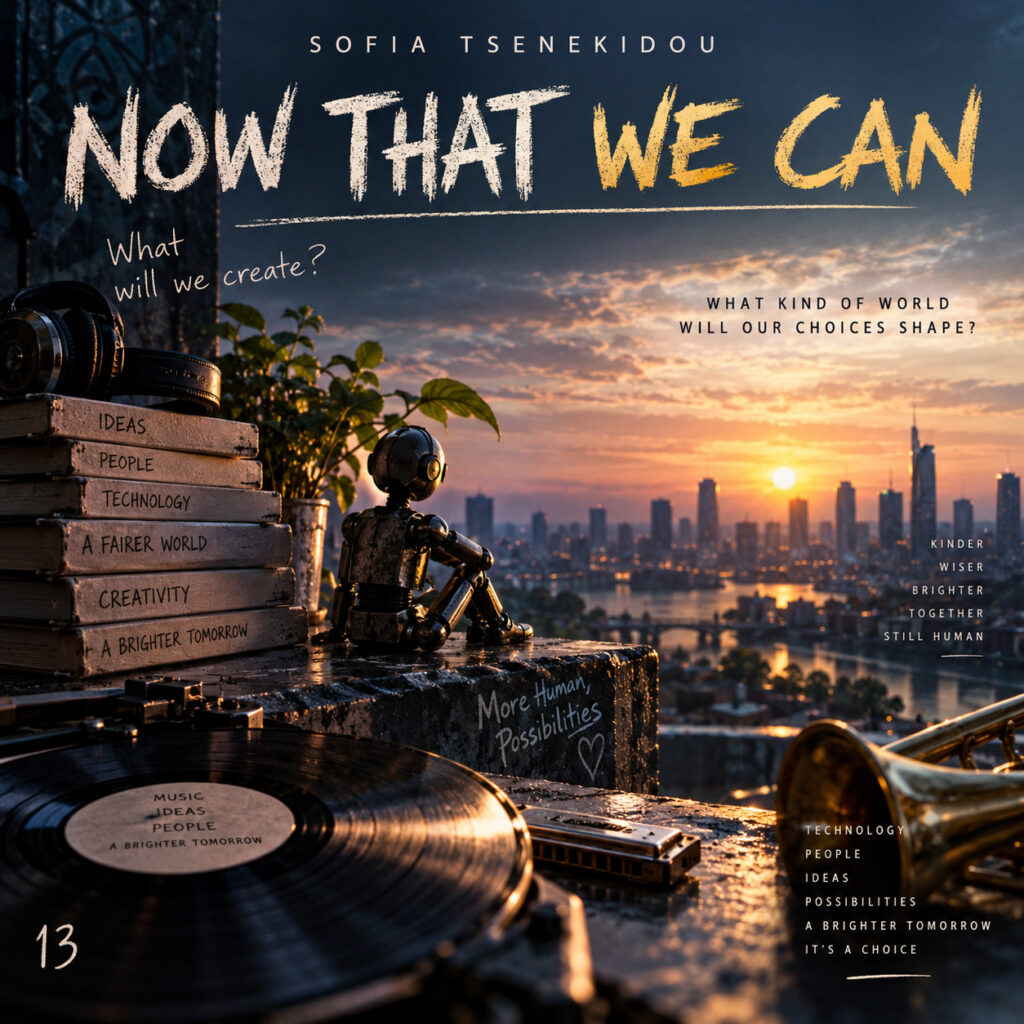
Now That We Can
A song about human choice in an age of expanding technological power—asking not only what we are now capable of creating, but what kind of world our choices will shape.
English
Genre / Style: Funk · Hip-Hop / Rap · Soul
Mood / Feeling: Curious · Energetic · Reflective
Listen
Version 2 – Funky Soul Primary / Final
Selected final version, expanding the original hip-hop concept with sudden funky-soul sections and additional acoustic instrumentation.
About
Now That We Can began with a simple shift in the way we ask questions about technology.
Much of the conversation around artificial intelligence and technological development focuses on capability: What can machines do? What will become possible next? How far can intelligence, automation and technology extend?
But capability opens another question. Once something becomes possible, what do we choose to do with that possibility?
The song places that question back in human hands. Technology can extend what we are able to create, build and influence, but increased capability does not decide the direction for us. The choices we make with it continue to shape what enters the world — and, through that process, they also shape us.
That is why the song gradually moves away from the distinction between human and machine toward something more fundamental: responsibility, choice and meaning.
The future is not simply something technological that arrives and happens to us. We participate in creating it through what we choose to amplify, develop and bring into existence.
“Human — you create the meaning. You always did.”
Lyrics
[Intro — Voice 1]
Now that we can…
[Voice 2]
Can what?
[Voice 1]
Create intelligence.
Build machines.
Extend the mind.
Turn dreams into reality.
[Voice 2]
So what?
[Voice 1]
Now that we can—
what will we create?
[Verse — Voice 2]
We gave machines our language,
gave metal hands a way to move.
Now civilization stands before us—
what it becomes is ours to choose.
[Pre-Chorus — Both]
What makes a human
different from a machine?
[Voice 2]
We choose
what we create.
[Chorus — Both]
Now that we can,
what will we create?
What kind of world
will our choices shape?
Power grows,
the question stays:
What will we choose
to amplify today?
[Bridge — Voice 1]
Technology extends the hand.
[Voice 2]
Intelligence extends the mind.
[Voice 1]
But who decides
where they reach?
[Voice 2]
We do.
[Final Chorus — Both]
Now that we can,
what will we create?
Not human or machine—
but what we become
through everything we make.
[Voice 1]
The future isn’t coming.
[Voice 2]
We’re shaping it.
[Voice 1]
Human—
[Voice 2]
you create the meaning.
[Voice 1]
You always did.
[Both]
Now that we can—
choose.
Versions
Version 1
Original version with a sparse experimental hip-hop arrangement.
Version 2 – Funky Soul Primary / Final
Selected final version, expanding the original hip-hop concept with sudden funky-soul sections and additional acoustic instrumentation.
Connections
Now That We Can connects with the book 'We are Humans not Machines' through the question of the human role in an increasingly technological world. The song shifts attention from what technology is capable of doing to what humans choose to create, amplify and give meaning to—placing responsibility for direction not in the technology itself, but in the choices we make with it.
Books
Themes
Theme: Creativity · Technology
Credits & Publication
Concept & creative direction by Sofia Tsenekidou · Lyrics co-created with ChatGPT · Music created with Suno
- Sofia Tsenekidou — Concept · Original concept and creative direction
- Sofia Tsenekidou — Creative Direction · Creative direction, selection and development of the final song
- Sofia Tsenekidou & ChatGPT — Lyrics · Lyrics developed through human–AI co-creation
- Suno — Music / Composition · AI-assisted music generation based on creative direction and music style prompts
- Created
- 2026-09-09
- First published
- 2026-09-09
- First published on
- Suno
- Release status
- released